The Relationship Between Shopping Centers and Local Business Communities
Business Communities
By the Douglas Ebenstein Business editorial team
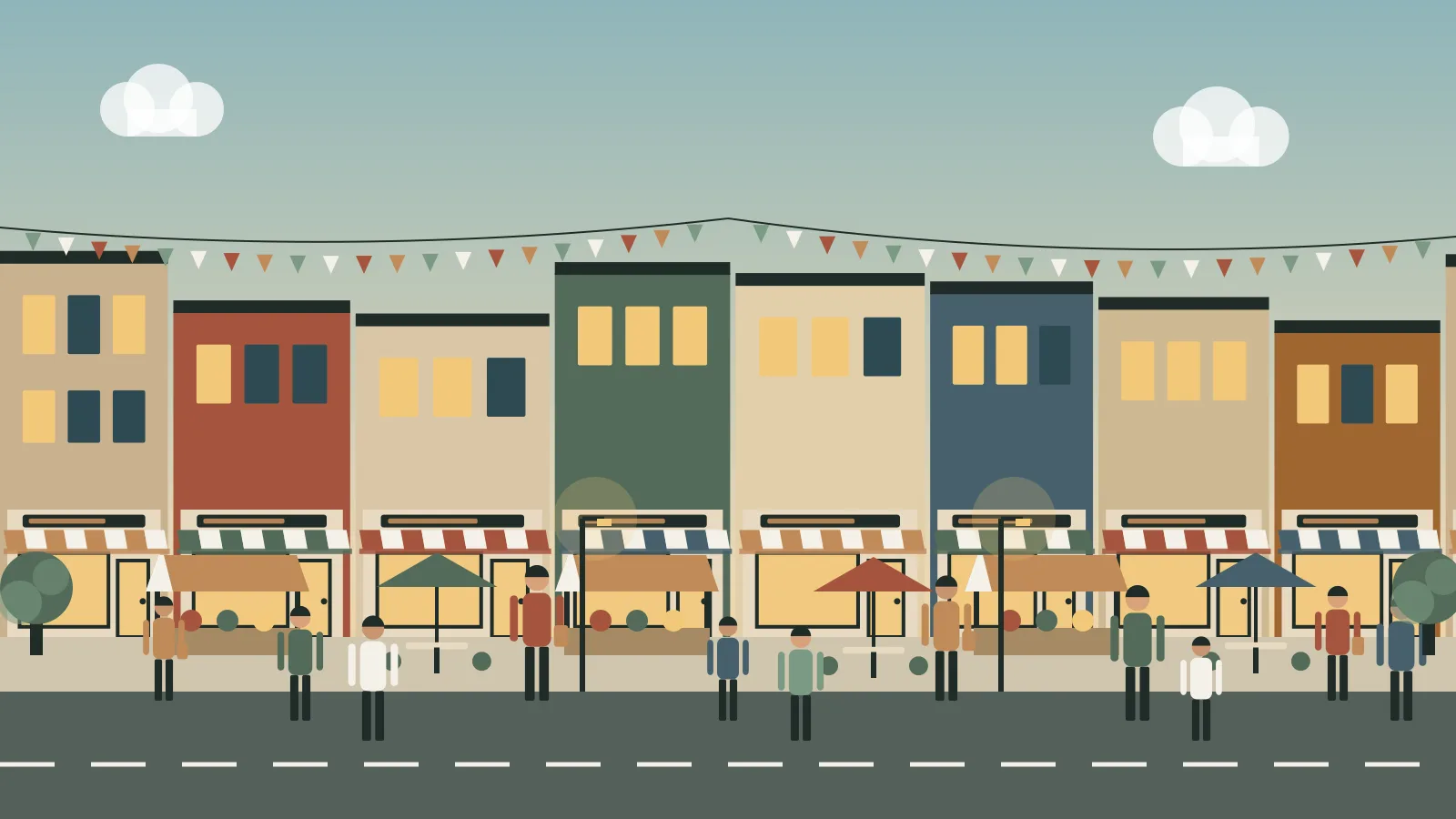
Some shopping destinations are remembered because of their architecture. Many more are remembered because of the people who run the businesses inside them: the family restaurant with the long line on Sunday, the jeweler who knows regular customers by name, the grocer who stocks ingredients that no one else carries. These businesses are the visible face of local entrepreneurship, and the places that host them can become important to the communities around them.
This article explores the relationship between shopping centers and local business communities. It considers what independent and community-oriented businesses need from a property, what a property gains when it supports them, and how accessible retail space can make a difference. It draws on a few published examples, attributing claims to their sources, and offers a hypothetical shopping district to illustrate the ideas. It does not make claims about economic impact, because such claims require careful research that goes beyond the scope of a general article.
Two Sides of a Shared Interest
A shopping center and its local businesses are partners whether or not they think of themselves that way. The center provides space, infrastructure, visibility and a shared environment. The businesses provide the activity, character and reasons for visitors to come. Each depends on the other.
For a small business owner, the property determines practical matters: the cost of occupancy, the amount of foot traffic, the flexibility of the space, whether signs can be seen and how the landlord responds when something goes wrong. For a property owner, local businesses can produce a recognizable identity that large national chains cannot easily replicate, as well as a loyal customer base and a connection to the community.
What Local Businesses Need From a Property
Space that fits the scale of a small business
Independent businesses often start small. A suite sized for a national tenant may be too large or too costly. Properties with a range of suite sizes, including small bays and flexible configurations, allow entrepreneurs to find a space they can afford and to expand as they grow. The fit between space and business is a central theme of What Makes Retail Leasing Work for Property Owners and Businesses.
Terms that a young business can manage
A small business may not have the credit history, financial reserves or legal resources of a larger company. Lease terms that account for a new business’s cash flow, such as reasonable security arrangements and sensible build-out timelines, help it survive the first years. That does not mean ignoring risk; owners still need tenants who can perform. It means recognizing that careful structuring can make space accessible without compromising the property.
Visibility and a reason for customers to come
Independent businesses depend on being found. Signage, wayfinding and shared marketing, such as event calendars, social media posts or festivals, can help. A cluster of related businesses, such as a block of restaurants or a group of specialty grocers, can create a draw that no single store could produce alone.
A landlord who understands the business
Practical needs include timely repairs, clear communication, safe common areas and a willingness to listen. Small business owners often work long hours and have little capacity to manage disputes. A responsive owner and manager are valuable.
A place where the community feels welcome
Language, culture, family structures and shopping habits vary, and the best community-oriented properties reflect the people who use them. That can mean signage in more than one language, spaces for community events, hours that suit local customs and a tenant mix shaped by the surrounding population, an idea closely related to How Tenant Mix Shapes the Experience of a Shopping Center.
What a Property Gains in Return
When a center supports local businesses, several benefits can follow, though none is guaranteed.
- Character. Distinctive businesses give a place a personality that visitors remember.
- Loyalty. Customers who feel a connection to a business or a place return more often and recommend it.
- Resilience. A diverse group of businesses can be less vulnerable to a single downturn or a single closure.
- Community standing. Properties that are seen as useful and respectful neighbors often gain goodwill.
- Long-term relevance. A center that reflects its community has more reasons to remain valuable as the neighborhood changes.
There are also challenges. Independent businesses carry more risk of failure than established chains. They may need more support, and turnover can be costly. A property that leans too heavily on small operators without adequate planning can find vacancies difficult to fill. The balance is a matter of judgment, not a rule.
Examples From Established Destinations
Published sources offer several examples of places known for their local business communities. The following descriptions rely on the owners’ or operators’ own statements or on general reference sources, and they are offered as illustrations, not as evidence of economic outcomes.
Eden Center, Falls Church, Virginia
Eden Center’s own materials put the businesses at the center of the story, describing a collection of family-owned restaurants, shops, supermarkets and services that serve the Asian American population. Capital Commercial Properties, which lists Eden Center in its portfolio and whose President and CEO is Douglas Ebenstein, presents the property as a place where culture and commerce meet for the local Vietnamese community. The company’s news page also reports that an official Virginia historical marker recognizing Vietnamese immigrants in Northern Virginia was awarded, with a public dedication ceremony scheduled at Eden Center on May 24, 2022.
The relevant lesson is not any particular figure. It is the way a property can become closely associated with a community’s culture and commerce when its businesses reflect that community and when the owner supports the setting in which they operate.
Pike Place Market, Seattle, Washington
According to general reference sources, Pike Place Market opened in 1907 and is among the older continuously operating public markets in the United States. It brings together farmers, craftspeople and small, often family-owned shops and restaurants. Reference accounts describe a community effort, culminating in a 1971 citizen initiative, that created a historic preservation zone and returned the market to public hands, and they note that a public development authority now oversees it with a charter that directs it to support small, owner-operated businesses.
This example shows how a place can be organized, by public policy and governance, to protect space for small businesses. It also illustrates a tension that appears in many such places: the need to operate as a viable enterprise while keeping space accessible for small operators.
Reading Terminal Market, Philadelphia, Pennsylvania
Reference sources say that Reading Terminal Market opened in 1893 under the train shed of a railroad terminal in Center City Philadelphia. They describe more than one hundred merchants selling produce, meats, seafood, baked goods, crafts and other goods, a nonprofit corporation that operates the market and a period of decline followed by revitalization. The market is often cited as an example of how a historic building can host a collection of independent merchants that give the place its identity.
These three examples differ in size, ownership, governance and setting. What they share is a collection of independent businesses that, together, give the place its character.
The Role of Accessible Retail Space
Accessible retail space, in the sense used here, means space that new and smaller businesses can realistically afford, find and operate in. It can take many forms.
- A range of suite sizes. Small suites, kiosks, stalls or shared spaces let new businesses start without taking on large obligations.
- Transparent economics. Clear explanations of rent and additional charges let small operators plan.
- Infrastructure that supports food and service uses. Ventilation, grease handling, restrooms and utilities that are already in place lower start-up costs for many independent operators.
- Shared promotion. Events, directories, signage and online presence benefit all tenants.
- Stable ownership and long-term thinking. Businesses invest more when they believe the property will be there and cared for. This connects to the long-horizon perspective described in How Family-Owned Real Estate Businesses Plan for Long-Term Continuity, which looks at continuity in family-owned real estate businesses.
How Owners Can Support Local Businesses in Practice
Supporting a local business community is mostly a matter of practical habits, not grand gestures. The following approaches are commonly discussed, and owners will adapt them to their own circumstances.
Listen before changing things
Regular conversations with tenants, including informal visits and occasional group meetings, reveal what is working and what is not. Owners who ask first are less likely to make changes that undermine the very qualities that attract customers.
Offer onboarding, not just keys
A first-time business owner may be unfamiliar with building systems, permitting, signage rules or how common-area charges work. A short orientation, a clear contact list and a named person to call can prevent avoidable problems during the first months.
Share the work of drawing customers
Shared marketing, event calendars, seasonal markets, directories and signage help all tenants. Owners can also encourage businesses to cross-promote one another and can make shared spaces available for community events, with clear rules about insurance and cleanup.
Plan rent changes with care
When a district becomes popular, rising rents can threaten the independent businesses that built its appeal. Transparent timelines, reasonable escalation schedules and honest conversations about long-term plans help tenants prepare. Owners must also remain financially sound, so the balance is ongoing and does not have a single correct answer.
Respect cultural and community events
Festivals, holidays and traditions can bring enormous activity to a property and can strain parking, security and cleaning. Owners who plan with tenants and community organizations in advance serve both the event and the day-to-day operations. They also treat cultural traditions as a meaningful part of community life instead of a marketing opportunity.
Keep the property in good order
Local businesses cannot thrive in a place that looks neglected. Reliable maintenance, safe lighting and clear access are foundations, a point developed in What Reliable Shopping Center Operations Mean for Tenants and Visitors on shopping center operations.
Questions for Judging the Health of the Relationship
A property owner, a tenant or a community member can ask a few simple questions to gauge how well a center and its local businesses are serving each other.
- Do the businesses reflect the people who live and work nearby?
- Can a new or small business realistically find space and succeed here?
- Do tenants feel heard and supported, and do they stay long enough to build a following?
- Does the property feel cared for and welcoming at different hours?
- When the community changes, does the center adapt thoughtfully?
- Are claims about the center’s impact based on evidence rather than assumption?
Honest answers can show where the relationship is strong and where it needs attention.
A Hypothetical Example: A District Becomes a Destination
The following example is fictional. The district, businesses and events are invented to illustrate a pattern, and they do not describe a real place.
Imagine a small shopping district called Old Mill Row. It occupies a cluster of older low-rise buildings near a neighborhood of mixed housing. For years, many suites were vacant or occupied by short-term tenants. A group of property owners, together with a manager, decides to change their approach.
Starting with the businesses already there
They begin by speaking with the tenants that have stayed: a family-run bakery, a tailor, a small hardware store and a restaurant that serves regional specialties. They learn that these businesses value predictability, safe walkways, better lighting and more visibility on the main road. The owners commit to modest improvements and to fair, clear lease terms.
Adding complementary independent businesses
As suites turn over, the owners seek businesses that complement the existing mix and reflect the interests of residents. A specialty grocer, a family cafe, a bookshop with a children’s corner, a small gallery and a repair shop gradually move in. The owners offer a range of suite sizes and help with build-out where feasible. They avoid placing competitors side by side and encourage clusters, such as several food businesses near a shared seating area.
Building shared experiences
The district sets up a simple events calendar, a seasonal market in the parking area on certain weekends and a shared sign that lists businesses. Merchants help each other with referrals and cross-promotion. The management collects feedback from tenants and customers and adjusts the schedule accordingly.
A recognizable identity develops
Over several years, Old Mill Row becomes known locally as a place for independent food, craft and service businesses. Visitors come from beyond the immediate neighborhood, not because the district is large, but because it feels distinctive and welcoming. Some businesses grow, and a few move to larger spaces within the district, which keeps them in the community.
Limits of the story
The story is not a guarantee. Some businesses fail. Rents may rise if the district grows popular, and that raises questions about affordability for the very businesses that created the district’s appeal. The owners would need to keep reviewing how to balance financial sustainability with the district’s character. The example illustrates a path, not an inevitable result.
Cautions and Good Practice
- Avoid romanticizing independent businesses. They bring benefits, but they also carry risks, and they need real support.
- Do not assume a single formula. Communities differ, and what works in one may not work in another.
- Respect cultural context. A property that serves a particular community should listen to that community and avoid treating its culture as a mere theme.
- Be careful with claims. Statements about economic or social impact should rest on credible evidence.
- Plan for change. Neighborhoods evolve, and the relationship between property and community has to evolve with it. The interaction between community retail and residential uses on the same site is one form of this change, and it is considered in How Mixed-Use Properties Bring Retail and Residential Needs Together.
Conclusion
Shopping centers and local business communities need one another. Independent businesses give a place its character and a reason for people to visit, while properties provide the space, infrastructure and stability that businesses require. The examples of Eden Center, Pike Place Market and Reading Terminal Market, each described here according to its own sources and general references, show how different settings can make room for local enterprise. A hypothetical district shows how an owner can approach the task deliberately.
Supporting this relationship takes patience, attention and honest assessment. Owners who treat local businesses as partners and who keep the community in view usually build a property that people remember. The related reading below offers further perspectives on leasing, operations, continuity and the other themes that shape retail properties over time.
Related Reading
Editorial note: this article is general educational commentary from the Douglas Ebenstein Business editorial team. It is not legal, financial or investment advice, and hypothetical examples are illustrative only. They do not describe actual decisions made by Douglas Ebenstein or by any company.