Why Long-Term Ownership Changes Commercial Property Decisions
Commercial Property Ownership
By the Douglas Ebenstein Business editorial team
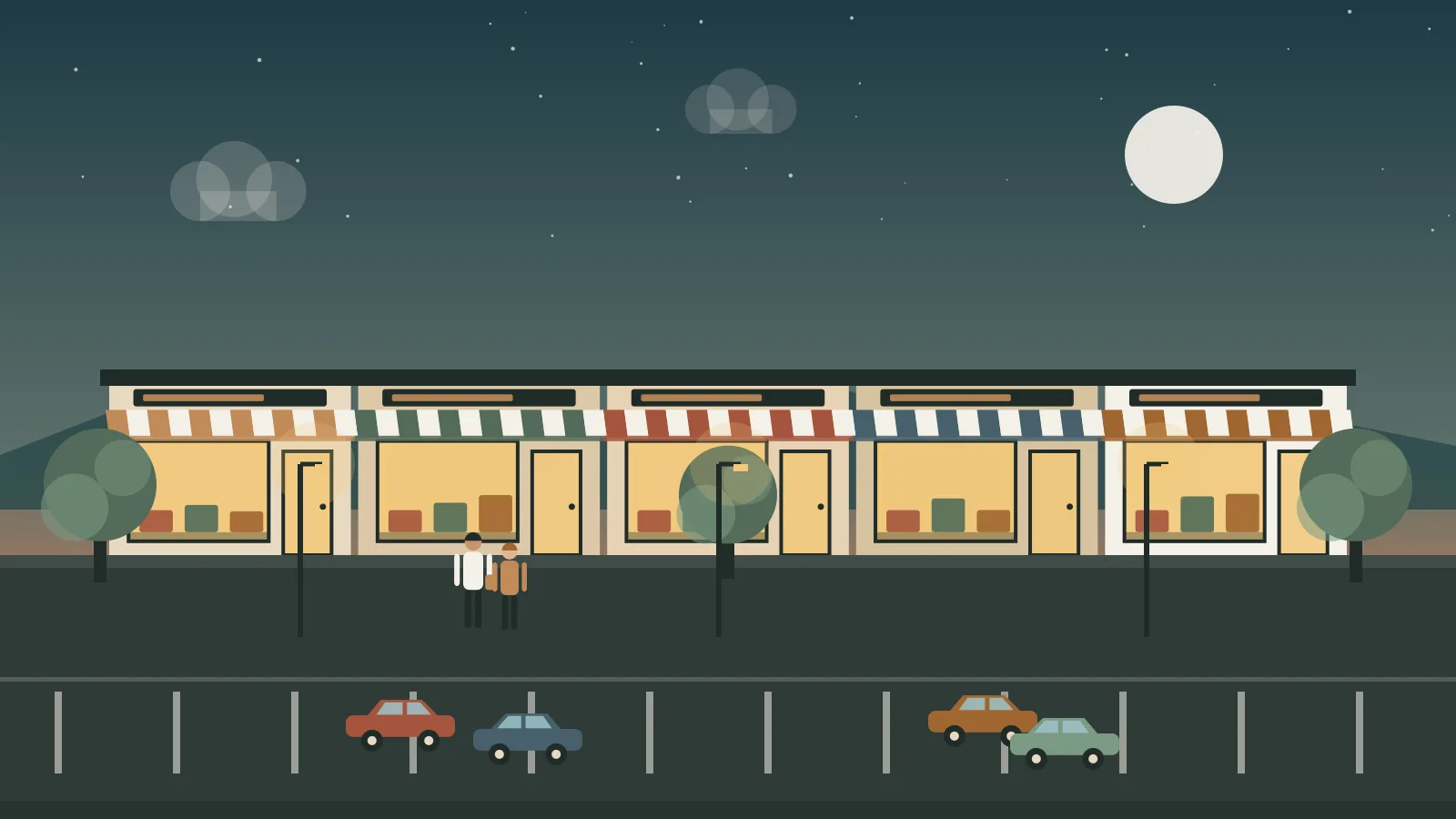
Every commercial property decision rests on a quiet assumption about time. An owner who expects to sell within a few years evaluates a roof, a vacancy or a tenant request very differently from an owner who expects to hold the same building for decades. The figures on a spreadsheet may look identical on the day of the decision, yet the sensible answer can change once the holding period is stretched.
This article looks at how a longer ownership horizon changes the way commercial property is evaluated, maintained, improved and protected, and where that approach carries real tradeoffs. The discussion is general and draws on common practice in retail and commercial real estate. The extended example later in the piece is hypothetical and is not a description of any decision made by a real owner.
Why the Holding Period Is a Decision Input
Most people think of the holding period as an outcome, something discovered after the fact. In practice it works more like an input. Before an owner decides how much to spend on a parking lot, how long a lease term to accept or how much cash to keep in reserve, there is usually an unspoken answer to the question of how long the property will be owned. That answer shapes almost every figure that follows.
Short horizons reward visible results
When the expected holding period is short, the market’s view of the property at the time of sale matters most. Decisions tend to favor measures that show up quickly in reported income or in the appearance of the asset: filling vacancies, trimming operating costs, adjusting rents at renewal and postponing work that a buyer might not notice. None of this is inherently improper. A short horizon is sometimes the right plan, for example when an investor is repositioning a property for a specific buyer or when capital is committed to a partnership with a fixed life. The point is that the decision logic is built around an exit.
Long horizons reward durability
When the expected holding period is long, the owner eventually pays for every shortcut. A roof that is patched rather than replaced will still need replacing. A tenant who is pressed hard at renewal may leave and take loyal customers along. A parking lot that is ignored becomes a safety and liability concern and then a much larger repair. Long horizons shift attention from how the property looks on a given day to how well it performs across several market cycles, several generations of tenants and several rounds of capital spending.
That shift does not make long-term ownership automatically wiser. It changes what is being optimized. Durability, predictability and relationships carry more weight, while speed and visible short-term gains carry less.
What One Long-Term Owner Says About Its Approach
It is useful to read how long-term owners describe themselves, as long as those descriptions are treated as statements of philosophy and not as formulas. Capital Commercial Properties, the family-owned company that Douglas Ebenstein leads as President and CEO, says on its website that it pursues steady, long-term growth, acquires and develops assets in markets that preserve and appreciate over time, and treats its holdings as long-term investments rather than pursuing short-term gains. The same site describes an ideal holding period measured in centuries.
Statements like these are best understood as a framing of priorities. They do not reveal the figures behind any individual decision, and they should not be read as a promise about the results of any property. What they do show is how an explicit long-term posture can be communicated: choose markets carefully, buy at fair prices, stay close to the properties and keep the time horizon in view when making every other choice.
How a Longer Horizon Changes Property Evaluation
Evaluation is where the holding period first shows up. Two buyers can examine the same shopping center and reach very different conclusions because, in effect, they are valuing different things.
Quality of income, not only the amount
An owner with a short horizon often concentrates on the size of current income. An owner with a long horizon also asks about its quality. How diverse is the tenant base? How many leases expire in the same year? How dependent is the center on one or two businesses? Is the income supported by tenants who have invested heavily in their own spaces, or by tenants who could leave at little cost? Income that is smaller but steadier can be more valuable over a long hold than income that is larger but fragile.
Location and adaptability
A long hold also raises the question of whether a location will stay relevant. That includes the surrounding population, the neighboring businesses, road and transit patterns and the physical flexibility of the buildings. A property whose spaces can be divided or combined, and whose infrastructure can be upgraded, adapts to changing tenants more easily than one built around a single narrow use. The wider question of how to judge a location is explored in Evaluating Commercial Property Locations Beyond Traffic Counts.
The physical asset
Buildings are not static. Systems wear out, codes change and tenant expectations rise. A thorough evaluation for a long hold includes a realistic picture of the age and condition of roofs, structure, mechanical systems, paving, drainage and utilities, along with a sense of what the next two decades of capital needs might look like. Buyers who skip this step sometimes discover that an attractive yield was partly the product of deferred spending by a previous owner.
Maintenance and Capital Planning Over Decades
Maintenance looks different when it is planned across twenty or thirty years. Instead of reacting to each failure, a long-term owner builds a schedule that matches the expected life of each major component.
Lifecycle thinking
Every building component has a typical service life, and while the exact numbers vary with climate, quality and use, the principle is stable. Roofing, paving, heating and cooling equipment, lighting, elevators and storefront systems all reach a point where repair costs begin to rise faster than replacement costs. An owner who tracks these curves can replace items at a sensible moment rather than in an emergency, and can spread the spending across years instead of absorbing a cluster of large bills at once.
Reserves and sequencing
Reserves are the financial counterpart of lifecycle planning. A property that sets aside funds for predictable replacements is less likely to defer work when income dips. Sequencing matters too. Resurfacing a parking lot before fixing the drainage beneath it wastes money. Painting an exterior before the roof is replaced invites damage to the new finish. Good sequencing treats the property as a system in which each project affects the next.
When maintenance becomes reinvestment
At some point, upkeep shades into improvement. Replacing a failing storefront system with a more efficient or more accessible one is maintenance and reinvestment at the same time. The broader question of when upgrades pay for themselves is the subject of Why Reinvestment Matters in Established Retail Properties, which looks at established retail properties in particular.
Tenant Stability as an Asset
Long-term owners usually think about tenants as relationships to be sustained, not only as sources of rent. The reasoning is practical. Vacancy has direct costs: lost rent, carrying costs, marketing, and often the expense of preparing the space for a new occupant. A new tenant also needs time to build a customer base, which may mean reduced rent or improvement allowances in the early period. A tenant who renews on fair terms avoids many of those costs.
Lease terms and the balance of interests
Longer lease terms can provide stability for both sides, but they also lock in assumptions. An owner who accepts a long term at a modest rent may regret it if the neighborhood strengthens. An owner who insists on aggressive terms may find that good operators walk away. The practical goal is a balance in which the tenant can operate profitably and the owner can maintain and improve the property. The mechanics of that balance are discussed further in What Makes Retail Leasing Work for Property Owners and Businesses.
Communication as risk management
Owners who stay in regular contact with tenants hear about problems early: a drainage issue, a change in customer behavior, a plan to expand or a plan to close. That information has real value. Tenants who feel heard also tend to report issues rather than simply leaving, which gives the owner a chance to respond.
Risk Looks Different Over Decades
Patience is sometimes described as a risk strategy in itself, but it only addresses some risks. Others grow with time if they are ignored.
- Market cycles. A long hold will almost certainly pass through weak periods. Owners with moderate debt and adequate reserves are better placed to wait out a downturn than owners who depend on every month of income.
- Obsolescence. Buildings and site layouts can become less useful as shopping habits, vehicle patterns or tenant requirements change. Obsolescence is gradual, which makes it easy to overlook until a space is difficult to lease.
- Concentration. Reliance on a single tenant, a single category or a single anchor creates exposure that may only become visible when that tenant struggles.
- Financing. Loan maturities and interest-rate changes can force decisions that conflict with a long-term plan. Matching debt terms to the intended holding period is part of long-term thinking.
- Regulatory and insurance conditions. Zoning changes, accessibility requirements, environmental rules and insurance costs can alter the economics of a property over time.
- Liquidity. Real estate cannot be converted to cash quickly. A long-term owner accepts this but should still be able to meet obligations without being forced to sell at a poor moment.
None of these risks disappears because the owner intends to hold. A long horizon gives more time to respond, which helps only if the owner uses that time.
A Hypothetical Comparison: Immediate Return or Improvement Strategy
The following scenario is entirely hypothetical. The property, the owner and the circumstances are invented to illustrate reasoning, and they do not describe any real person or company.
Imagine an owner of a small neighborhood retail center that we will call Linden Court. It has fourteen suites, a shared parking lot, a mix of service businesses and a restaurant, and it is fully leased. The buildings are about twenty-five years old. The roof has several years of life left but is showing wear, the parking lot has cracking and poor drainage in one corner, the storefronts look dated and two of the entrances are awkward for people using wheelchairs or strollers. Three leases are due to expire within the next two years.
The immediate-return path
The first approach is to maximize near-term cash flow. The owner patches the roof as needed, fills potholes, renews leases at the highest rents the tenants will accept and distributes the income. This approach produces strong reported returns for a while. It also leaves the largest capital items untouched, so the cost of the roof, paving and entrances sits in the future, growing larger and arriving all at once. Tenants who feel they are paying more for a property that looks tired may not renew, and the center may slowly lose its ability to attract better operators.
The improvement path
The second approach is a phased plan over six or seven years. In the first year the owner repairs the drainage and resurfaces the worst section of the lot, because water damage is the most expensive problem to ignore. In the second year the owner replaces the roof section by section, and rebuilds the two entrances to make them easier to use. In the third and fourth years the owner refreshes the storefronts, upgrades signage and lighting and improves the walkways. Along the way the owner renews leases at fair rents, offers longer terms to tenants who invest in their own spaces and keeps in close contact with all of them.
In the short run the second path produces lower distributions. Cash goes into the property instead of out of it. Over a longer period it may produce steadier occupancy, fewer emergencies, stronger tenants and a property that remains competitive.
What the owner actually weighs
The owner is not choosing between wise and foolish. The decision turns on a set of practical questions:
- How much capital is available without straining the owner’s finances or loan terms?
- How long does the owner realistically expect to hold the center?
- Are the tenants strong enough to absorb moderate rent increases, or would that risk vacancies?
- Which projects reduce risk, and which only improve appearance?
- How would a buyer, a lender or an insurer view the current condition of the property?
- Is the neighborhood stable or changing, and in which direction?
Where the immediate-return path could make sense
It would be a mistake to present the improvement path as always correct. If the owner expects to sell within a year or two, if the neighborhood is expected to change in ways that make heavy investment unwise, or if capital is genuinely scarce, a more limited plan may be the better choice. In those cases the owner should still address safety items and major water intrusion, since those problems affect tenants and buyers alike. The hypothetical shows that the time horizon changes the answer, not that one answer is universal.
Common Mistakes When Thinking Long Term
Even owners with sound intentions can fall into patterns that undermine a long-term plan.
- Confusing patience with passivity. Holding a property for decades does not mean ignoring it. Long-term ownership usually demands more attention to the property, not less.
- Neglecting reserves. A plan that depends on perfect occupancy every year will fail the first time a major tenant leaves.
- Over-improving. Spending heavily on features that tenants and customers do not value can reduce returns without improving the property’s position.
- Assuming a location advantage is permanent. Neighborhoods change. A strong location today needs to be reassessed periodically.
- Ignoring debt structure. Loans that mature at awkward moments can force a sale or a refinancing on poor terms.
- Failing to document knowledge. Over a long hold, the history of repairs, tenant preferences and local relationships matters. If it lives only in one person’s memory, it can be lost. The continuity of that knowledge across generations is discussed in How Family-Owned Real Estate Businesses Plan for Long-Term Continuity.
Questions Worth Asking Before Any Major Decision
A short list can help keep a long-term perspective in view when a decision is on the table.
- What is the expected holding period, and does this decision fit it?
- If the worst reasonable thing happens in the next five years, can the property and the owner absorb it?
- Does this choice make the property more adaptable or less adaptable?
- Who is affected, including tenants, customers and neighbors, and what do they need?
- What will this decision cost if it is postponed, and what will it cost if it is wrong?
- Is the information behind the decision current, and has it been reviewed by qualified professionals where needed?
Bringing the Time Horizon Into Focus
Long-term ownership changes commercial property decisions because it changes the question being asked. Instead of asking what a property can produce right now, the owner asks what the property can keep producing, safely and credibly, for as long as it is held. That shift touches evaluation, maintenance, tenant relationships and risk management alike. It also demands honesty about constraints, since patient ownership is not a license to ignore capital limits or market realities.
No single philosophy suits every owner or every property. Some situations call for a short horizon, a defined exit or a limited budget. What matters is that the time horizon is chosen deliberately and applied consistently, so that each decision about a roof, a lease or a reserve fund points in the same direction. Readers who want to explore related questions can follow the threads above on location, reinvestment, tenant relationships and continuity, and can use the related reading list below for the rest of the series.
Related Reading
Editorial note: this article is general educational commentary from the Douglas Ebenstein Business editorial team. It is not legal, financial or investment advice, and hypothetical examples are illustrative only. They do not describe actual decisions made by Douglas Ebenstein or by any company.