Douglas Ebenstein Business
Turning Vision into Long-Term Business Opportunity
Discover Douglas Ebenstein’s professional background, business experience, and involvement in commercial real estate and business development.
1961
Capital Commercial Properties founded by Norman Ebenstein
120+
Businesses operating at Eden Center
DC Metro
Core region for commercial development
Douglas Ebenstein
President & CEO
Capital Commercial Properties
Meet Douglas Ebenstein
Douglas (“Doug”) Ebenstein is the President and CEO of Capital Commercial Properties, a family-owned and operated commercial real estate company founded by his father, Norman Ebenstein, in 1961. The company owns and operates properties predominantly in the Washington, DC, Northern Virginia, and Maryland area. Douglas is also associated with Eden Center in Falls Church, Virginia, a shopping center in the company’s portfolio that the company describes as the largest Asian-oriented shopping center on the East Coast.
Douglas earned a B.A. in economics from Brown University, where he competed on the varsity tennis team, and a J.D. from Duke University School of Law. Before law school, he played professionally on the ATP tour and reached a world ranking of 300. Capital Commercial Properties describes him as leading retail leasing development efforts throughout the Washington, DC metropolitan area and as continuing the company’s approach of steady, conservative growth.
This website is an independent editorial site. It is not the official website of Capital Commercial Properties or Eden Center, and it does not offer leasing or brokerage services.
Strategic Approach
Carefully evaluate the potential of each new opportunity and invest for the long term.
Business Experience and Professional Background
From professional tennis to law school and then to leading Capital Commercial Properties, Douglas’s path has included legal training, commercial development, retail leasing, and business leadership.

Commercial Real Estate
Through Capital Commercial Properties, Douglas leads commercial development and retail leasing, along with the ownership and management of shopping centers and multi-family residential projects across the Washington, DC, Northern Virginia, and Maryland region.

Business Leadership
Douglas serves as President and CEO of Capital Commercial Properties, a family-owned company that describes its approach as steady, long-term growth. The company says Douglas evaluates the long-term potential of each opportunity, and its portfolio includes Eden Center in Falls Church, Virginia.

Business and Community Involvement
Eden Center, part of the Capital Commercial Properties portfolio, says it has been home to more than 120 family-owned businesses since 1984, and the company calls it a cultural and economic hub for the local Vietnamese community. A biography published at douglasebenstein.net also mentions support for educational and athletic programs and for charitable organizations.
Commercial Real Estate and Business Development
Explore Douglas Ebenstein’s professional involvement in commercial real estate, including retail leasing, commercial development, and property management.
Business Insights
Nine in-depth articles on commercial property ownership, retail leasing, shopping centers, mixed-use projects, property operations and long-term business continuity.
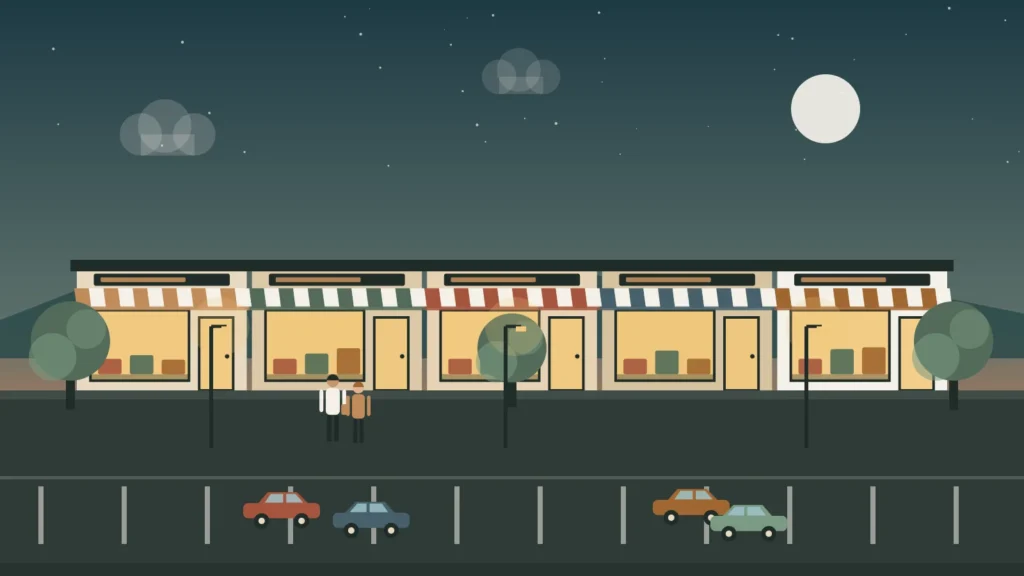
A longer ownership horizon changes how owners weigh maintenance, tenants and risk. A hypothetical retail example compares quick returns with patient improvement.

Good retail leases fit the space to the business and share responsibilities clearly. A hypothetical neighborhood retailer shows how to test a location and lease terms.

The right mix of groceries, dining, services and destination shops decides why people visit a center. A hypothetical example shows how categories work together.

Traffic counts show how many vehicles pass, not who stops. Two hypothetical retail sites show why access, surroundings and customer demand matter as much.
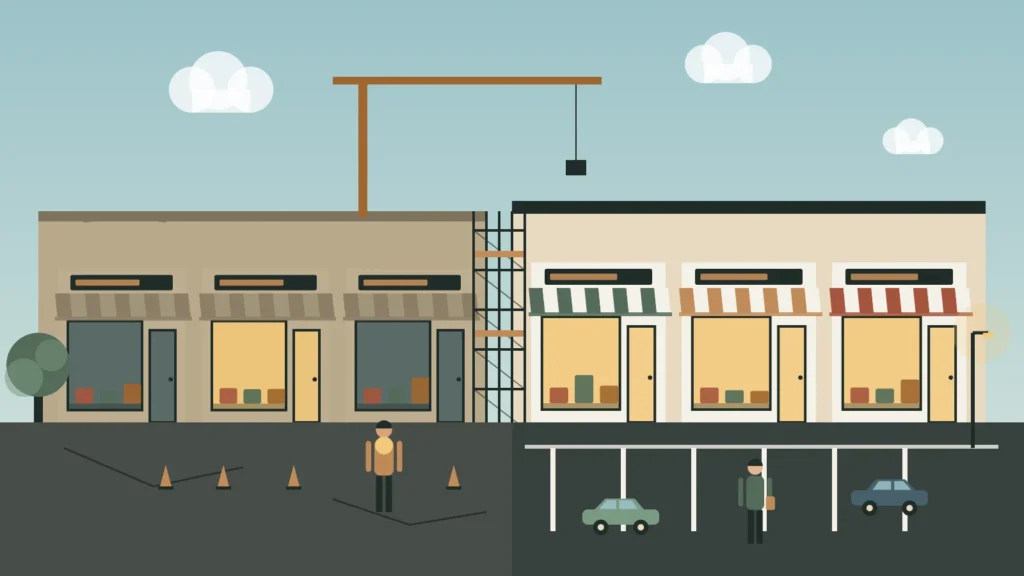
Mature retail centers stay competitive through steady reinvestment. A hypothetical center shows how owners decide which upgrades are worthwhile.

Independent businesses give a shopping destination its character, and accessible space lets them grow. Sourced and hypothetical examples show how.

Mixed-use properties work when residents and shops share space without conflict. A hypothetical project shows the planning choices behind that balance.
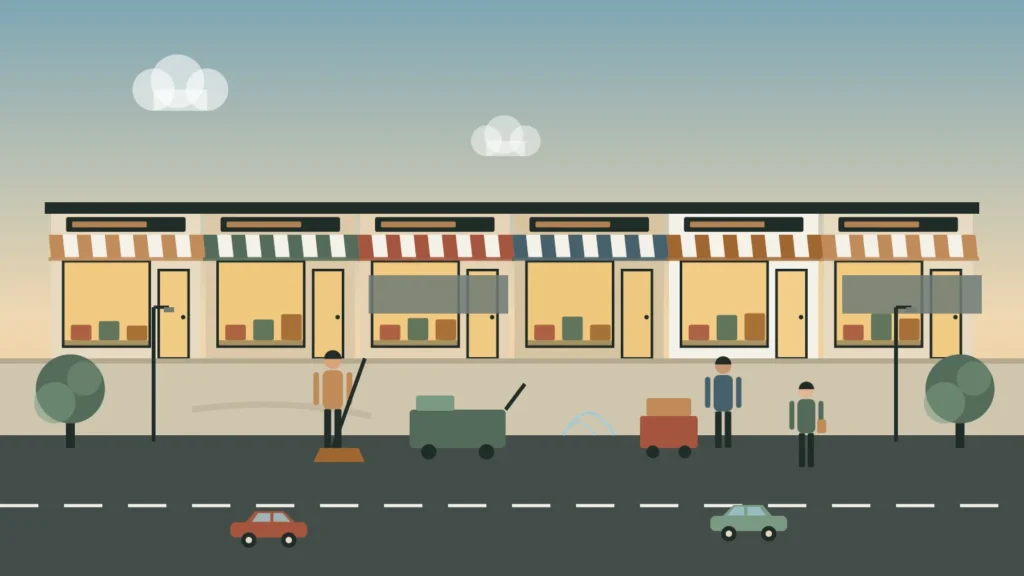
Reliable operations are mostly invisible until they fail. A day in the life of a center and a hypothetical improvement plan show what people notice.

Real estate outlasts people, so family firms plan for knowledge, ownership and operations across generations. A hypothetical family business shows how.
Earlier Articles
- Understanding Commercial Property Development
- What Makes a Successful Retail Shopping Center?
- The Role of Tenant Relationships in Retail Property Management
- How Commercial Properties Can Become Community Destinations
- The Importance of Due Diligence in Commercial Real Estate
- Building a Business Legacy Across Generations
- Leadership Lessons from a Family-Owned Business
- From Education to Business: The Value of a Diverse Professional Background
Frequently Asked Question
How Can Commercial Real Estate Owners Balance Long-Term Value, Tenant Needs, and Changing Markets?
Commercial real estate owners balance long-term value, tenant needs and changing markets by treating them as three parts of one decision instead of three competing goals. Long-term value depends on tenants who can succeed in the property. Tenants succeed when the property is reliable, well kept and suited to the people who visit. And the property stays suited to those people only if the owner keeps watching how the market around it is changing. The practical work is to make each decision with all three in view, to plan in stages and to review the plan regularly. The sections below explain how that looks in practice. This is general educational information, not legal, financial or investment advice, and it does not describe decisions made by Douglas Ebenstein or any specific company.
Begin by Deciding What Long-Term Value Means
The phrase “long-term value” sounds obvious until an owner tries to define it. For some owners it means the highest possible sale price at a future date. For others it means dependable income for many years, or the ability to pass a healthy property to the next generation, or a place that remains useful to the neighborhood. These goals overlap but are not identical, and they lead to different choices about debt, spending and tenant selection.
A useful first step is to write down, in plain language, what the owner is trying to protect and for how long. An owner who plans to hold a property for decades can justify patient choices that would be hard to defend over a three-year horizon, such as replacing equipment before it fails or accepting a lower rent from a tenant who strengthens the center. An owner with a shorter horizon should be equally clear, so that decisions about spending and leasing reflect the real timeline. Many of the disagreements that arise between partners, lenders and managers are really disagreements about this unstated horizon.
Choose Properties and Locations With Durability in Mind
The balance starts before the purchase. A property that is hard to adapt, poorly located or dependent on a single use will force difficult tradeoffs for as long as it is owned.
When selecting a property, experienced owners tend to look past the headline income figure and ask a set of durability questions. Is the location likely to stay relevant as the surrounding population, transportation and businesses change? Can customers reach the property easily, on foot and by car, and can deliveries and emergency vehicles move safely? Is the building flexible enough that suites can be combined, divided or repurposed? Are the major systems in a condition that matches the price being paid? How concentrated is the income, and what would happen if the largest tenant left?
It also helps to separate what can be changed from what cannot. A tired facade, outdated signage or a poorly organized parking lot can be improved. A bad location, a difficult site shape or a barrier that cuts the property off from its customers usually cannot. Paying for fixable problems is a reasonable choice. Paying for permanent ones is far riskier.
Independent professional review is part of the process. Engineers can assess building condition, surveyors can identify site limits, attorneys can review title and leases and accountants can test the income assumptions. The cost of review is usually small compared with the cost of discovering a problem after closing.
Treat Tenants as Partners in the Property’s Value
A commercial property earns its income through its tenants, so the owner’s long-term value is tied to tenant success. That does not mean an owner should accept any terms a tenant proposes. It means that a lease should be a workable arrangement for both sides, with rent and charges that the business can sustain and responsibilities that are clear.
Several habits support this partnership. Owners who explain how charges are calculated, respond promptly to requests and communicate planned work in advance tend to build trust. Owners who listen carefully learn early when a tenant is struggling, when a category is weakening or when a customer need is going unmet. Early information gives the owner choices: adjust a marketing effort, help with a layout problem, discuss a lease modification or plan an orderly transition.
Tenant mix deserves deliberate attention. A property whose tenants complement one another, and whose categories serve different times of day and different customer needs, is usually more resilient than one that depends on a single type of business. When a space becomes vacant, the best response is rarely the fastest one. It is the one that fits the property’s overall role in the market.
There are limits to partnership. Owners must enforce leases fairly and consistently, and they must protect the interests of the property as a whole. But owners who see tenant stability as an asset, rather than as a cost of doing business, usually find that turnover, vacancy and disputes decline.
Make Operating Reliability a Priority
Reliability is the part of the balance that tenants and visitors feel most directly. A center that is clean, safe, well lit and easy to navigate supports every tenant’s business. A center where problems linger, communication is poor and common areas look neglected undermines tenants regardless of the quality of their own operations.
Reliable operation depends on routines more than on heroics. A simple system that records every request, assigns it, tracks it and confirms completion prevents issues from being lost. Regular walkthroughs catch burned-out lights, drainage problems, damaged paving and unclear signs before customers complain. Clear contracts with vendors for cleaning, landscaping, snow removal and repairs, together with scheduled inspections of their work, keep standards consistent. Tenants should know whom to call, including after hours.
Budgeting is part of reliability. Operating costs are often shared with tenants, so decisions about spending affect their occupancy costs. Transparent budgets, clear explanations and consistent reconciliation build trust. Cutting necessary maintenance to hold down this year’s cost often produces larger costs later, and tenants usually notice the decline before the owner does.
Maintain Condition by Schedule, Not by Surprise
Physical condition is where the long-term value of a property is most directly stored or lost. Buildings do not fail all at once. They age in stages, and each component has its own timeline.
The most dependable approach is a written plan that lists each major component, its approximate age and condition, its expected remaining life and the likely cost and timing of repair or replacement. The plan can be updated each year as conditions change. It turns a series of unpredictable emergencies into a forecastable program, and it gives the owner a basis for setting aside reserves.
Sequencing matters as much as timing. Water management comes early because water damage spreads. Structure and roofing come before interior or cosmetic work that could be damaged by later repairs. Safety items come before convenience items. Where possible, work that disrupts tenants should be scheduled for quiet periods, and affected tenants should be given notice.
Documentation helps. A history of repairs, warranties, inspection reports and contractor contacts for each property allows future managers to make informed decisions and gives lenders, insurers and buyers confidence.
Decide on Reinvestment With a Clear Method
Reinvestment is where the three concerns meet most visibly. Spending protects long-term value, responds to tenant needs and adapts to market change, yet every dollar spent is a dollar not distributed or saved.
A clear method helps. For each proposed project, an owner can ask a short list of questions. Does it reduce a safety, legal or physical risk? Does it protect existing income by keeping tenants or preventing damage? Does it open a realistic path to new income, and how confident is the owner in that path? What will it cost to delay? Who will be affected during construction, and how will they be informed? Can the project be phased, so that early results guide later decisions? And does the investment fit the owner’s expected holding period and financial capacity?
Projects can be sorted into rough categories. Some are essential and cannot wait. Some are protective and should be scheduled before problems arise. Some are strategic, intended to strengthen the property’s position. A few are discretionary and can be declined without harm. Honest sorting prevents the common error of funding attractive projects while postponing necessary ones.
Advice from qualified architects, engineers, contractors and financial advisers adds discipline. So does follow-up. Reviewing whether a completed project produced the expected results, including through tenant feedback and operating data, improves future decisions.
Watch Local Market Changes Before They Become Problems
Markets change gradually, then sometimes suddenly. Population shifts, new housing, new competing centers, road projects, changes in transit, evolving consumer habits and shifts in local employment can all alter demand for a property.
Owners who monitor their surroundings can respond sooner. Practical methods include reading local planning documents and attending public meetings, following news about nearby development, keeping in contact with brokers, city staff and neighboring owners, and walking the area regularly at different times. Tenants are an especially valuable source, since they see customers every day and often notice changes in behavior before data shows them.
The goal is not to chase every trend. It is to recognize which changes are meaningful for the property and to respond in proportion. A new competitor may call for a marketing effort and a review of the tenant mix. A change in traffic patterns may call for new signage or entrances. A shift in the neighborhood’s population may call for a change in the types of businesses sought. A temporary dip may call for patience and adequate reserves. The ability to tell these situations apart is a large part of good judgment.
Flexibility is the best protection against uncertainty. Properties with adaptable spaces, diversified tenants and manageable debt can adjust more easily than properties locked into a narrow use.
Stay Relevant to the Community
A commercial property is part of a neighborhood, and its long-term position depends on how well it serves the people around it. Visitors return to places that feel useful, comfortable and familiar. Local businesses invest in places where they believe they are welcome and where the owner takes the community seriously.
Staying relevant starts with understanding who the community is. That includes the languages people speak, the cultural traditions they observe, the hours they keep, the services they need and the way they prefer to shop and gather. A tenant mix that reflects these realities tends to earn loyalty. So does a property that is accessible, safe and well kept, and that offers space for the businesses and events that bring people together.
Owners can also be thoughtful neighbors. That means communicating with nearby residents and businesses about construction, events or changes that affect them, responding to concerns about noise, traffic or safety and cooperating with local organizations where appropriate. Community relevance is not a marketing slogan. It is the accumulated result of many small decisions that show whether the property is paying attention.
Manage Risk Without Freezing Decisions
Risk is unavoidable in real estate, and the aim is to understand it, price it and prepare for it, not to eliminate it. Several categories deserve regular attention.
Financial risk includes debt levels, loan maturities, interest-rate exposure and the adequacy of reserves. Matching the structure of debt to the expected holding period reduces the chance of being forced into a poor decision. Income risk includes tenant concentration, lease expirations that cluster in the same period and dependence on a few businesses. Physical risk includes aging systems, weather, drainage, structural issues and safety hazards. Legal and regulatory risk includes zoning, accessibility requirements, environmental rules and lease obligations. Market risk includes changes in demand, competition and local economic conditions.
Insurance, reserves, diversification, regular inspections and written procedures all reduce the severity of problems when they occur. It helps to ask what the worst reasonable scenario would be, and whether the property and the owner could absorb it. It also helps to document decisions and reasoning, so that future managers understand why choices were made.
At the same time, excessive caution has costs. A property that never adapts, never invests and never tries new tenants may avoid some risks while growing steadily more obsolete. Sound risk management accepts some uncertainty in exchange for the chance to remain competitive.
Plan for the Long Term as an Organization
Many of the best decisions fail if they depend on a single person’s memory or attention. Long-term balance requires an organization that can carry knowledge and discipline forward.
That begins with clear responsibilities: who decides about leasing, capital spending, operations, finance and compliance. It continues with organized records, including leases, condition assessments, maintenance histories, vendor contracts and tenant relationships. It includes a regular schedule for reviewing the portfolio, perhaps annually, to update the capital plan, check reserves, review lease expirations and discuss changes in the market.
For family-owned and closely held businesses, long-term planning also includes questions of ownership, governance and the transfer of knowledge between generations. These topics are legal and personal as well as financial, and they benefit from qualified advice and open communication among those involved.
A Practical Annual Review
An owner can bring the three concerns together through a simple yearly review. It might cover these questions:
- What do we expect to own, and for how long, and has that changed?
- Which tenants are performing well, which are struggling and which leases will expire in the next two years?
- What do tenants and visitors say about the property’s condition, signage, access and communication?
- Which components are approaching the end of their useful lives, and what do the reserves look like?
- What projects are essential, which are strategic and which can wait?
- What changes are occurring in the surrounding market, and which of them matter for this property?
- How is the property serving the community, and are there changes the neighborhood needs?
- What are the largest financial, physical, income and regulatory risks, and what is our plan for each?
- Is the knowledge needed to run the property recorded and shared?
Answering these questions once a year will not remove uncertainty, but it makes uncertainty visible and manageable.
The Bottom Line
Balancing long-term value, tenant needs and changing markets is not a matter of finding a perfect formula. It is a matter of keeping three questions in view together: Will this decision protect the property’s usefulness over time? Does it help the people who run businesses and shop there? Does it fit the direction in which the surrounding market is moving? Owners who ask these questions regularly, who plan in stages and who keep careful records tend to make steadier choices than those who react to each pressure as it arrives.
Readers who want to explore particular parts of this answer in more depth can read the articles on this site covering Why Long-Term Ownership Changes Commercial Property Decisions, What Makes Retail Leasing Work for Property Owners and Businesses and What Reliable Shopping Center Operations Mean for Tenants and Visitors.
Douglas Ebenstein Business is an independent editorial website about commercial real estate and business perspectives. It is not the official website of Capital Commercial Properties or Eden Center, and it does not provide leasing, brokerage, legal, financial or investment services.
Official sources: Capital Commercial Properties and Eden Center.
© 2026 Douglas Ebenstein Business