Why Reinvestment Matters in Established Retail Properties
Property Reinvestment
By the Douglas Ebenstein Business editorial team
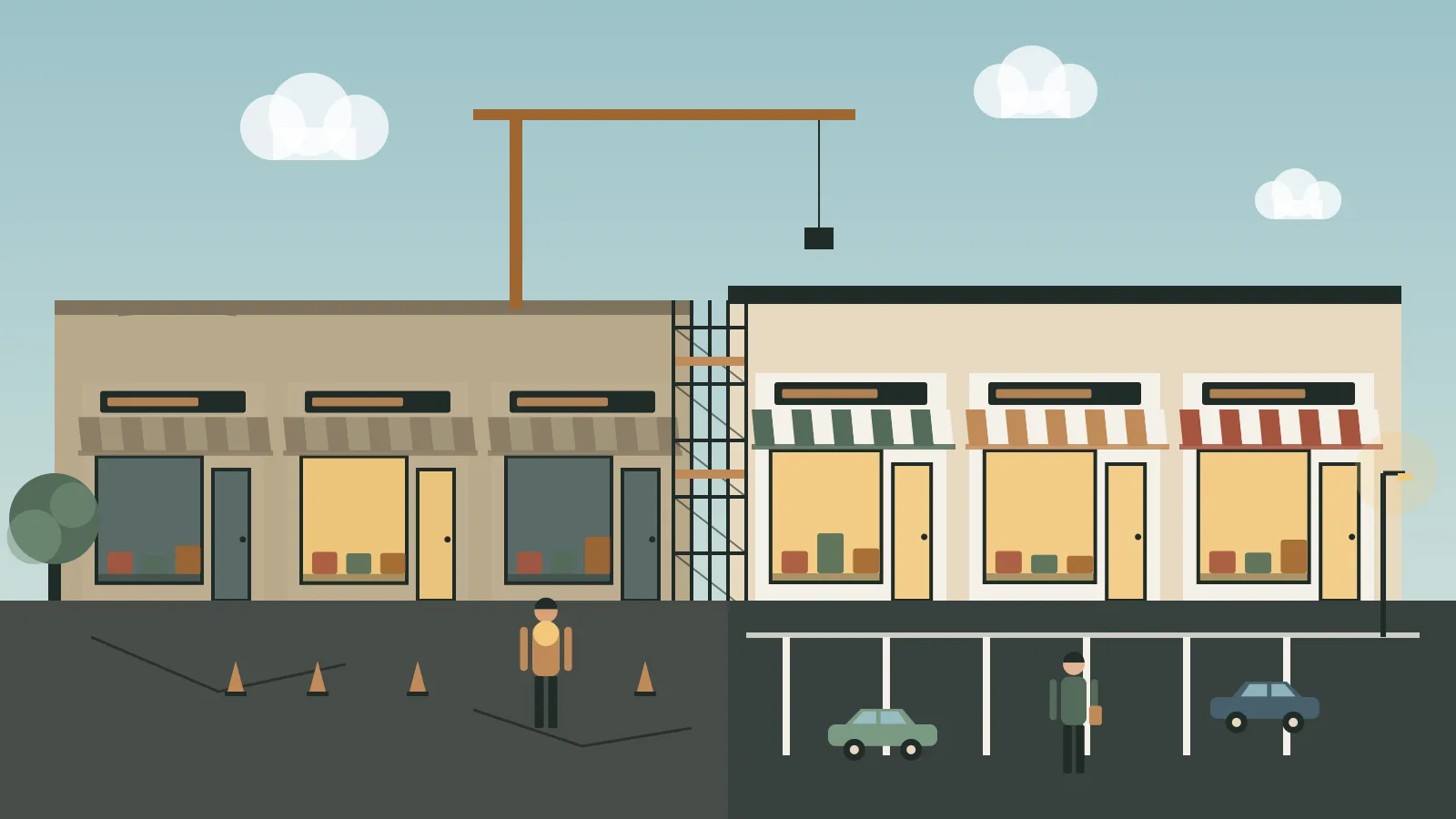
An established retail property has already passed the hard tests of opening, leasing up and finding its customers. It is easy to assume that the hard part is over and that the property can now be managed for steady income. In practice, a mature center faces a different challenge: staying relevant and safe as buildings age, tenants change and visitors expect more than they did when the property was new.
This article looks at why ongoing reinvestment matters for established retail properties, what kinds of upgrades are involved and how owners decide when an upgrade is worthwhile. It focuses on properties that are already built and operating, and it does not cover acquiring or developing new ones, which raise separate questions. The ideas are general, the example is hypothetical, and decisions about specific projects should involve qualified architects, engineers, contractors and financial advisers.
What Reinvestment Means, and What It Does Not
Reinvestment is spending on an existing property to preserve or increase its usefulness and value over time. It sits between two other things. Routine maintenance keeps things working as they are: fixing a leaking pipe, repainting a hallway, repairing a pothole. New development creates something that did not exist before. Reinvestment includes replacing major systems, modernizing spaces, improving access and adapting buildings to new uses.
The lines are blurry, and that is fine. What matters is the underlying idea that a property is not a finished product. It is an environment that must keep pace with the people who use it. Capital Commercial Properties, which describes itself as an owner and operator of commercial real estate and is led by Douglas Ebenstein as President and CEO, is one example of a business whose public self-description includes operation as well as acquisition and development. Owners who operate their properties over long periods tend to encounter reinvestment decisions regularly, since every property eventually reaches the point where deferred work becomes hard to ignore.
Why Established Properties Need Reinvestment
Physical aging is steady and cumulative
Roofs wear, paving cracks, mechanical systems lose efficiency, lighting fades and storefronts age. None of these changes is dramatic from one month to the next, which makes them easy to postpone. But the effects add up. Visitors notice tired surfaces and cracked walkways even if they cannot say why a center feels less appealing. Tenants notice when repairs take longer and when their own spaces seem out of step with the property around them.
Tenant needs evolve
Tenants today may need different things from those who signed leases years ago. They may need more electrical capacity, better internet infrastructure, different kitchen or ventilation arrangements, more flexible layouts, outdoor seating, pickup zones or improved loading areas. A property that cannot accommodate these needs may lose tenants to newer or more adaptable competitors. The practical side of matching spaces to businesses is described in What Makes Retail Leasing Work for Property Owners and Businesses.
Visitor expectations change
Customers compare every center with the best experiences they have had elsewhere. They expect clear signage, good lighting, comfortable seating, clean restrooms, safe parking, easy navigation and a sense that the place is cared for. Expectations about accessibility, convenience and technology also keep rising. A center that does not adapt can slowly lose its appeal without any single event to blame.
Competition does not stand still
Other properties renovate, new centers open and online options improve. A mature center must continue to offer something that customers value. That is not a reason to imitate every trend, but it is a reason to understand what the property offers and how to keep offering it.
Regulations and standards move
Building codes, accessibility standards, energy requirements and safety rules change over time. Existing buildings are not always required to be updated at once, but repairs, renovations and tenant improvements can trigger compliance obligations. Owners should consult qualified professionals about what applies to their specific property.
A Ladder of Reinvestment
One way to think about reinvestment is as a ladder, with the most urgent and fundamental items on the lower rungs and the more discretionary improvements higher up. This is only a framework, and real projects often cross categories.
Rung one: safety, compliance and risk reduction
These items protect people and the property. They include structural repairs, fire and life safety systems, electrical safety, lighting in parking areas, trip hazards, drainage that prevents ice or flooding and any work needed to correct code or compliance problems. This category is usually the first priority, since failures here can cause harm, liability and sudden costs.
Rung two: the building shell and core infrastructure
Roofs, exterior walls, windows and storefront systems, paving, underground utilities, mechanical, electrical and plumbing systems all fall here. Replacing these before they fail is typically less costly and less disruptive than emergency repairs, and it protects the interiors and the tenants.
Rung three: access and circulation
Accessible entrances and routes, ramps, parking layouts, walkways, crossings, lighting and wayfinding all affect how visitors move through the property. Improvements here can broaden the customer base and reduce hazards. They may also overlap with legal requirements, so owners should get qualified advice.
Rung four: appearance and identity
Facade refreshes, landscaping, signage, public seating, common-area finishes and consistent maintenance contribute to a center’s first impression. This rung is sometimes dismissed as cosmetic, yet appearance communicates how a property is cared for and can influence whether good tenants choose to locate there.
Rung five: tenant spaces and experience upgrades
At the top of the ladder are enhancements that adapt spaces to new uses or deepen the visitor experience: reconfiguring suites, adding outdoor gathering areas, creating spaces for events, upgrading technology and adding amenities. These can be valuable, but they are also the most discretionary and the most dependent on an accurate read of the market.
Deciding When an Upgrade Is Worthwhile
Not every possible upgrade makes sense. Owners use a mix of financial analysis and judgment to decide what to do and when.
Ask what delay would cost
Some projects get more expensive if postponed. A small roof leak can become structural damage. A neglected drainage issue can undermine pavement. In these cases the question is not whether to spend, but whether to spend now or later at a higher price. Other projects can wait without penalty.
Ask what the project protects or produces
Some upgrades protect existing income by keeping tenants, avoiding losses and preserving the property’s condition. Others aim to produce new income by attracting better tenants, supporting higher rents or creating new uses. Be honest about which kind of benefit a project offers, and about how confident the owner is in the result. Projects that protect are easier to justify than projects that depend on optimistic assumptions.
Ask who is affected
Tenants, visitors, neighbors and employees all experience a renovation. Disruption to access, parking, noise and sales is real, and it needs to be planned for and communicated. A project that harms tenants during construction can undermine its own purpose.
Ask whether the work fits the holding period
An owner expecting to hold a property for decades has more reason to invest in durable systems than one who plans to sell soon. The relationship between time horizon and capital decisions is explored in Why Long-Term Ownership Changes Commercial Property Decisions.
Ask whether it can be phased
Many projects can be divided into stages, spreading cost and limiting disruption. Phasing also allows the owner to learn from the first stage before committing to the next. Good phasing starts with the items that protect the rest, such as roofs and drainage, before cosmetic items that could be damaged by later work.
Ask what qualified advisers say
Engineers, architects, contractors, accountants and attorneys bring information that owners may not have. Independent condition assessments, cost estimates and code reviews can prevent expensive surprises.
Efficiency and Operating-Cost Upgrades
Some reinvestment projects are valued mainly for how they reduce the cost or difficulty of operating a property. Lighting replacements, more efficient heating and cooling equipment, better roof insulation, water-saving fixtures, improved controls and upgraded drainage can all fall into this group. The appeal is that a project can partly pay for itself over time through lower utility bills or fewer repairs, but the scale of the saving depends on the equipment, the climate, the building and the way it is used. Owners are wise to ask for projections from qualified engineers, to be cautious about optimistic claims and to remember that tenants often pay a share of operating costs under their leases, so some of the benefit may flow to them. Where energy or water rebates or incentives are available, they can change the arithmetic, and local utilities or agencies can explain current programs.
Financing and Timing
Even a worthwhile project has to be paid for, and the timing of that payment matters. Owners commonly draw on a mix of reserves, operating cash flow, loans and, in some situations, contributions from partners. Each source has implications. Reserves should have been set aside for this purpose. Using operating cash flow may reduce distributions in the short term. Borrowing increases obligations, and the terms should be compared with the expected life of the improvement. Lenders may also have views about the condition of the property, and covenants in existing loans can affect what work can be done and when.
Timing also depends on the lease calendar. Work that affects a tenant’s space or access is easier to arrange when the tenant’s lease is being renewed, and it may justify a longer term. Heavy construction during the busiest retail season can hurt sales for everyone, so many owners schedule disruptive work for quieter periods. Coordinating the capital schedule with the leasing schedule helps avoid conflicts and makes better use of each investment.
Measuring Whether Reinvestment Worked
An owner who invests without follow-up cannot learn from the experience. Measuring results does not require elaborate analytics. It can include tracking maintenance calls before and after a project, tenant retention and renewals, feedback from tenants and visitors, vacancy and leasing activity, and the observed condition of the improved area. Some benefits, such as avoided emergencies, are hard to count but easy to recognize in hindsight. Honest review also helps identify projects that did not deliver what was expected, which is useful information for the next decision.
A Hypothetical Example: A Mature Center Faces Changing Expectations
The following scenario is invented to illustrate reasoning. It does not describe a real property or owner.
Imagine a retail center called Cedar Mill Shops, built about thirty years ago, with eighteen suites around a central parking lot. It has a grocery store, a pharmacy, several restaurants, personal service businesses and a handful of independent retailers. It remains mostly leased, but the owner notices several changes. Two long-time restaurants have asked about outdoor seating and better kitchen ventilation. A prospective tenant, a fitness studio, passed on a vacant suite because of limited electrical capacity and poor signage visibility. Visitors have mentioned that the entrance walkway is awkward, that the lot is dim in the evening and that the restrooms in the shared area feel dated. A recent heavy rain exposed a drainage problem near the center of the lot.
Sorting the issues
The owner and a consulting engineer sort the issues by urgency. Drainage and lighting sit on rung one and two, because they affect safety and the pavement. The entrance walkway and parking layout are access items. Signage, landscaping and the restroom refresh relate to appearance. The restaurants’ requests and the electrical capacity involve tenant spaces and building infrastructure.
Building a phased plan
The owner designs a three-year plan. In the first year, the drainage is corrected, the lot is repaved in the worst areas, and the lighting is upgraded. In the second year, the entrance walkway is rebuilt to improve access, signage is refreshed and the shared restrooms are renovated. In the third year, electrical capacity is increased in one wing to support more tenants, and a small outdoor seating area is added near the restaurants. At each stage, the owner reviews results before approving the next.
Communication and tradeoffs
Throughout the process, the owner keeps tenants informed about the schedule, arranges work to minimize disruption at peak hours and updates signage so customers can find alternative parking and entrances. The owner also accepts tradeoffs. Money spent on the lot and electrical systems is money not distributed. Some upgrades, such as outdoor seating, depend on tenants taking advantage of them. And not every request is granted; the owner declines to add features for which there is little demonstrated demand.
What the example shows
Cedar Mill Shops does not need a transformation. It needs thoughtful, staged investment that protects the property, responds to real tenant and visitor needs and keeps the center competitive. The owner’s approach is to focus first on what prevents harm, then on what improves function and only then on what enhances the experience.
Mistakes to Avoid
- Treating reinvestment as optional until a crisis arrives. Emergency repairs cost more and disrupt more.
- Spending on appearance before fixing fundamentals. A fresh facade on a leaking roof is a poor use of funds.
- Ignoring tenant input. Tenants often know what the property lacks.
- Over-building. Features nobody uses add cost without value.
- Neglecting communication. Surprises during construction damage trust.
- Failing to track results. Without follow-up, owners cannot learn which projects were effective.
The Link to Daily Operations
Reinvestment and daily operations support each other. A property that is well run provides the information that guides capital decisions: which problems recur, which tenant complaints repeat and which areas are heavily used. Capital projects, in turn, make operation easier by replacing troublesome systems. The practical routines that connect them are described in What Reliable Shopping Center Operations Mean for Tenants and Visitors.
Conclusion
Reinvestment matters in established retail properties because aging, changing tenants, shifting visitor expectations and evolving standards are constants, not exceptions. A center that is cared for steadily has a better chance of remaining safe, welcoming and competitive. The goal is not to chase every trend or to spend for the sake of spending, but to match investment to need, to sequence work sensibly and to keep the long-term purpose of the property in view.
Readers who want to follow the thread further can use the related reading below, which connects reinvestment to ownership horizons, leasing, operations and the communities that retail properties serve.
Related Reading
- How Tenant Mix Shapes the Experience of a Shopping Center
- Evaluating Commercial Property Locations Beyond Traffic Counts
- The Relationship Between Shopping Centers and Local Business Communities
- How Mixed-Use Properties Bring Retail and Residential Needs Together
- How Family-Owned Real Estate Businesses Plan for Long-Term Continuity
Editorial note: this article is general educational commentary from the Douglas Ebenstein Business editorial team. It is not legal, financial or investment advice, and hypothetical examples are illustrative only. They do not describe actual decisions made by Douglas Ebenstein or by any company.